Individual path recommendation under transit disruptions
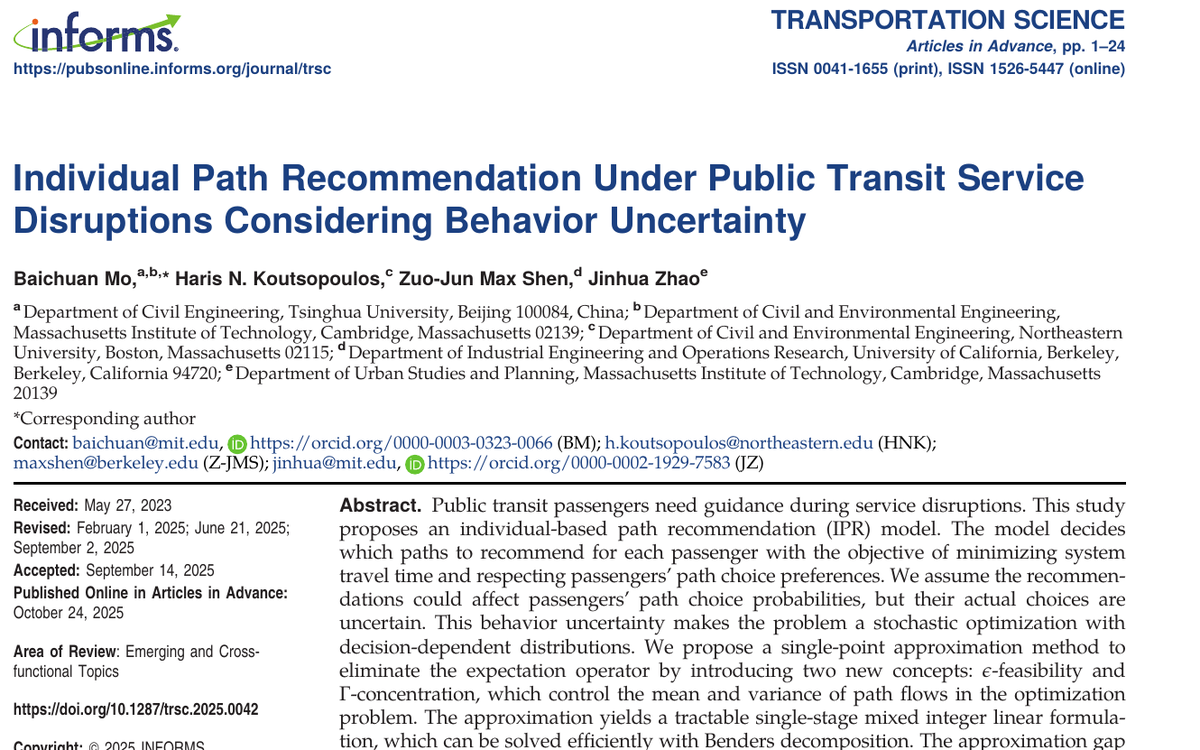
Models passenger behavior uncertainty and recommends resilient paths during service disruptions.
Research
MoS Lab studies how models, algorithms, and data can help transportation systems operate more efficiently, intelligently, and sustainably under uncertainty, disruption, and rapid urban change.
Models passenger behavior uncertainty and recommends resilient paths during service disruptions.
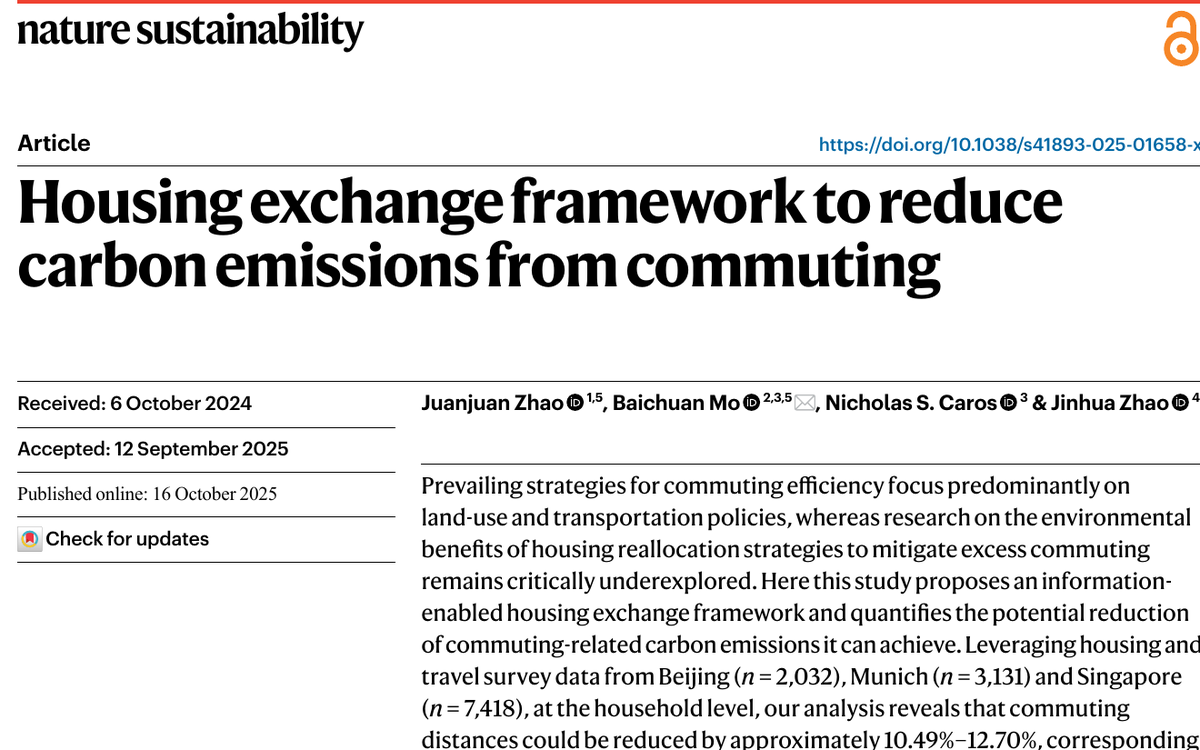
Uses household-level housing exchange strategies to reduce excess commuting emissions.
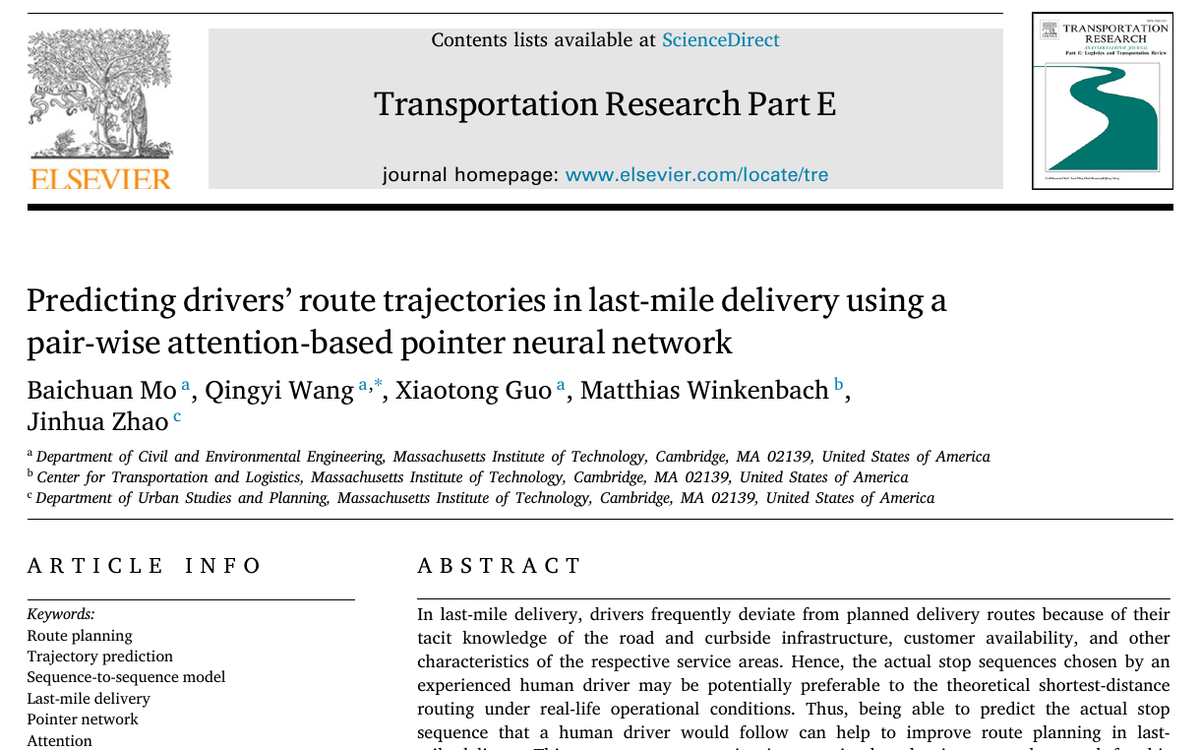
A pair-wise attention-based pointer neural network that predicts drivers' route trajectories in last-mile delivery.
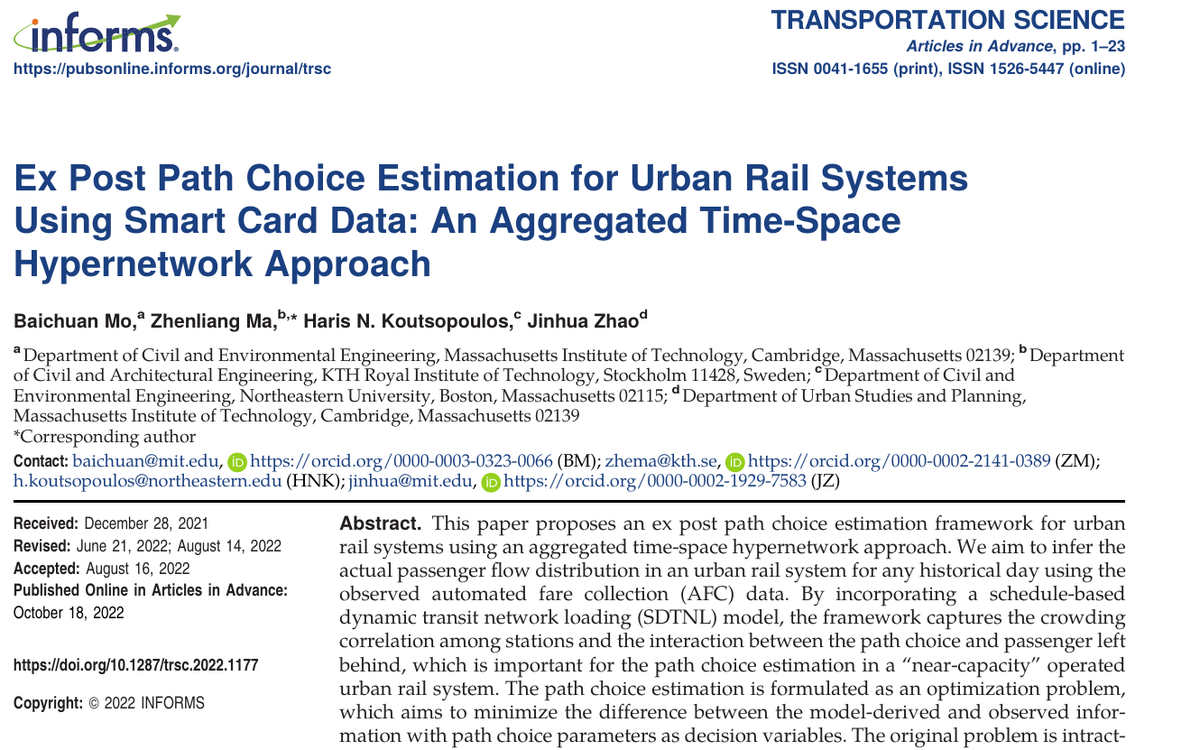
Estimates urban rail passenger path choices from smart card data via an aggregated time-space hypernetwork.
When incidents disrupt transportation systems, we study how efficient optimization and machine learning algorithms can adjust operations, guide passengers, and help systems recover quickly. Topics include incident-aware passenger behavior inference, robust path recommendation, network performance modeling, and resilient operations control.
We apply AI to public transit, shared mobility, and supply-chain logistics, including reinforcement-learning-based real-time decisions, time-series foundation models, transportation management agents, ETA prediction, and last-mile delivery route prediction.
We combine policy analysis, surveys, econometric models, smart card data, license plate recognition data, machine learning, and optimization to improve traditional behavioral and demand models.
We study commuting carbon emissions, public health risk, housing mobility, and urban cyber-physical-social system resilience, placing transportation in broader sustainability and interdisciplinary policy-evaluation frameworks.