Postdoctoral Fellows, Full-Time Research Assistants, Research Interns, and Visiting Students
The Mobility Science Lab (MoS Lab) at Tsinghua University is recruiting postdoctoral fellows, full-time research assistants, research interns, and visiting students. We study optimization, machine learning, and their applications in transportation and operations management. We welcome applicants seeking to conduct rigorous research or systematically develop their research capabilities.
Open Positions
Postdoctoral Fellows
- The position focuses on high-impact research and scholarly publication. Fellows will conduct independent and collaborative research within the lab’s areas of interest.
- Assist the principal investigator with mentoring students, preparing grant applications, managing research projects, and related responsibilities.
- Eligible candidates will receive full support in applying for Tsinghua University’s Shuimu Tsinghua Scholar Program.
- For outstanding candidates who qualify for the Shuimu Tsinghua Scholar Program but are not selected, the principal investigator will provide compensation matching the program’s salary level.
Full-Time Research Assistants
- This is a research-focused position comparable to a Research Scientist role at a U.S. university or research institution, with scholarly research and publication as its primary responsibilities.
- Depending on their interests and expertise, research assistants will independently or collaboratively develop research projects and contribute to problem formulation, modeling, computational experiments, and paper writing.
- Assist the principal investigator with mentoring students, preparing grant applications, managing research projects, and related responsibilities.
- Compensation will be determined based on the candidate’s research record, experience, and overall qualifications.
Research Interns / Visiting Students
- Collaboration will be primarily remote, and applicants from all educational levels are welcome.
- The principal investigator may provide a research topic, or students may propose a topic of interest and pursue it under the principal investigator’s guidance.
- The lab will provide necessary computing resources, AI tools, and research mentoring. The primary objectives are learning, skill development, and knowledge growth.
- Students who produce substantive research outputs will receive research compensation based on the nature of the outputs and their actual contributions.
Research Areas and Target Journals
- Transportation system resilience and operations optimization: multimodal information collection, pre-disruption resource allocation, and real-time control during disruptions. Information collection requires post-training multimodal large models, while control strategies primarily use large-scale mixed-integer optimization, stochastic optimization, robust optimization, and related methods.
- AI for Transportation: transportation management agents, LLM for OR, learn-to-optimize, and decision-making across diverse transportation scenarios in the AI era.
- Travel behavior and demand modeling: econometrics, discrete choice models, modern machine learning, and optimization-driven behavioral and demand analysis.
- Sustainable urban systems: carbon emissions from commuting, public health, and the resilience of urban cyber-physical-social systems, with a primary focus on publication in leading multidisciplinary journals.
Our research is driven by publication in leading international venues, with a primary focus on UTD24 journals, Transportation Science, and Transportation Research Part B, as well as other leading journals and conferences in transportation, operations management, artificial intelligence, and interdisciplinary research.
Principal Investigator
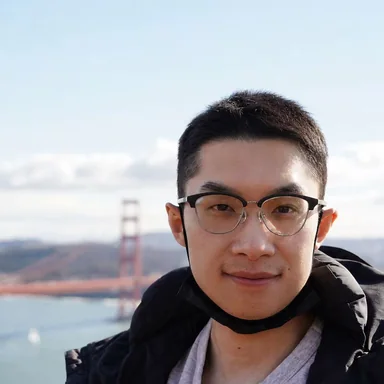
Baichuan Mo is a tenure-track Assistant Professor in the Department of Transportation Engineering at Tsinghua University and the director of MoS Lab.
He received his bachelor’s degree in Civil Engineering from Tsinghua University in 2018, dual master’s degrees in Transportation and Computer Science from MIT in 2020, and a PhD in Transportation from MIT in 2022. He was awarded the MIT UPS PhD Fellowship, and his dissertation received multiple honors, including the COTA Best Dissertation Award. In 2024, he was selected for a national-level young talent program in China.
He has published more than 30 papers in journals including Nature Sustainability, Transportation Science, Transportation Research Parts A/B/C/E, IEEE Transactions on Intelligent Transportation Systems, and the European Journal of Operational Research. Before joining Tsinghua, he was a Senior Research Scientist at Lyft and later a Staff Machine Learning Engineer and U.S. Supply Chain Algorithm Lead at ByteDance/TikTok E-Commerce, bringing experience in both academic research and large-scale algorithm deployment.
See his full faculty profile.
Qualifications
- A background in operations research, management science, transportation, computer science, statistics, applied mathematics, or a related field.
- Strong foundations in mathematical modeling, optimization, machine learning, econometrics, or data analytics.
- Demonstrated research ability and strong academic reading and writing skills in English, with a commitment to producing high-quality scholarly work.
- Postdoctoral applicants must hold a doctoral degree or be able to obtain one before starting the position.
- Full-time research assistant applicants must hold a master’s degree or above.
- Research interns and visiting students are welcome at all educational levels; research interests, learning ability, and research potential will be the primary considerations.
Application Materials
Please email the following materials to bmo[at]tsinghua.edu.cn:
- Curriculum vitae;
- Full texts of representative papers;
- Contact information for three referees.
Please use the subject line “Postdoctoral Application — Your Name,” “Full-Time Research Assistant Application — Your Name,” or “Research Intern/Visiting Student Application — Your Name.”