可持续城市系统
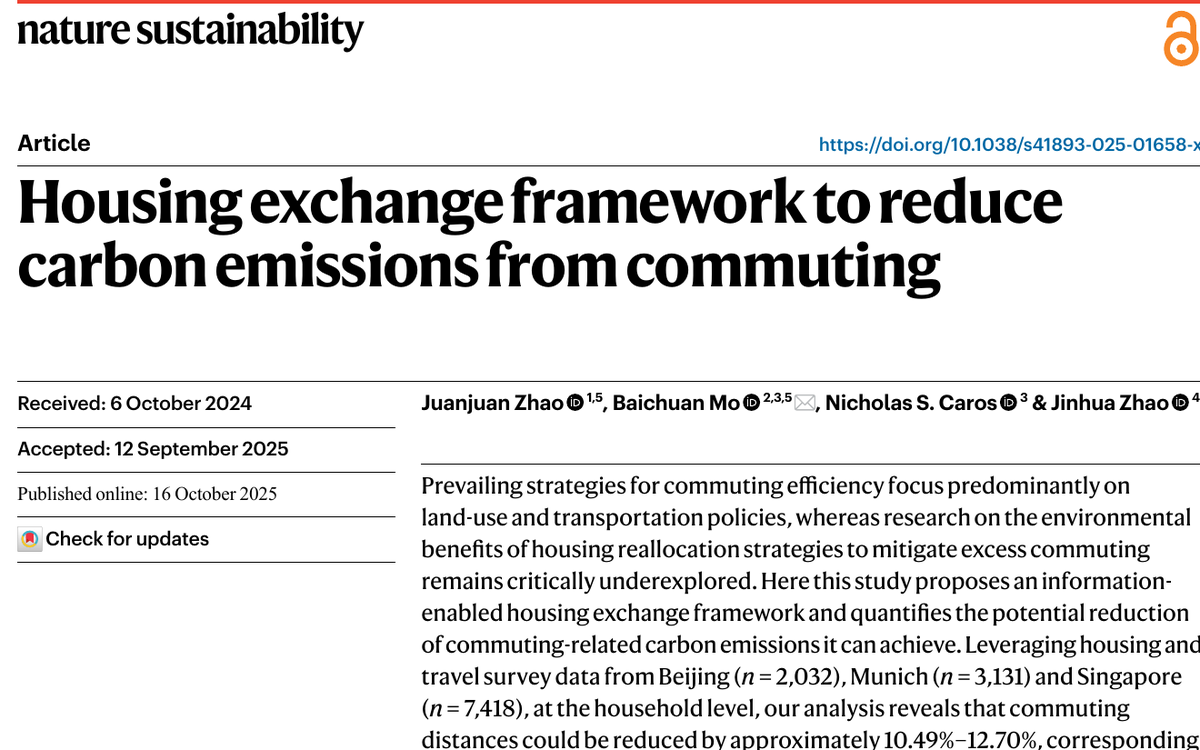
以住房置换降低通勤碳排放
通过住户层面的住房置换策略,降低过量通勤带来的碳排放。
Nature Sustainability, 2025, 8 (11), 1259-1269
研究
MoS Lab 关注模型、算法与数据如何帮助交通系统在不确定性、突发事故和快速城市化环境下更高效、更智能、更可持续地运行。
通过住户层面的住房置换策略,降低过量通勤带来的碳排放。
Nature Sustainability, 2025, 8 (11), 1259-1269
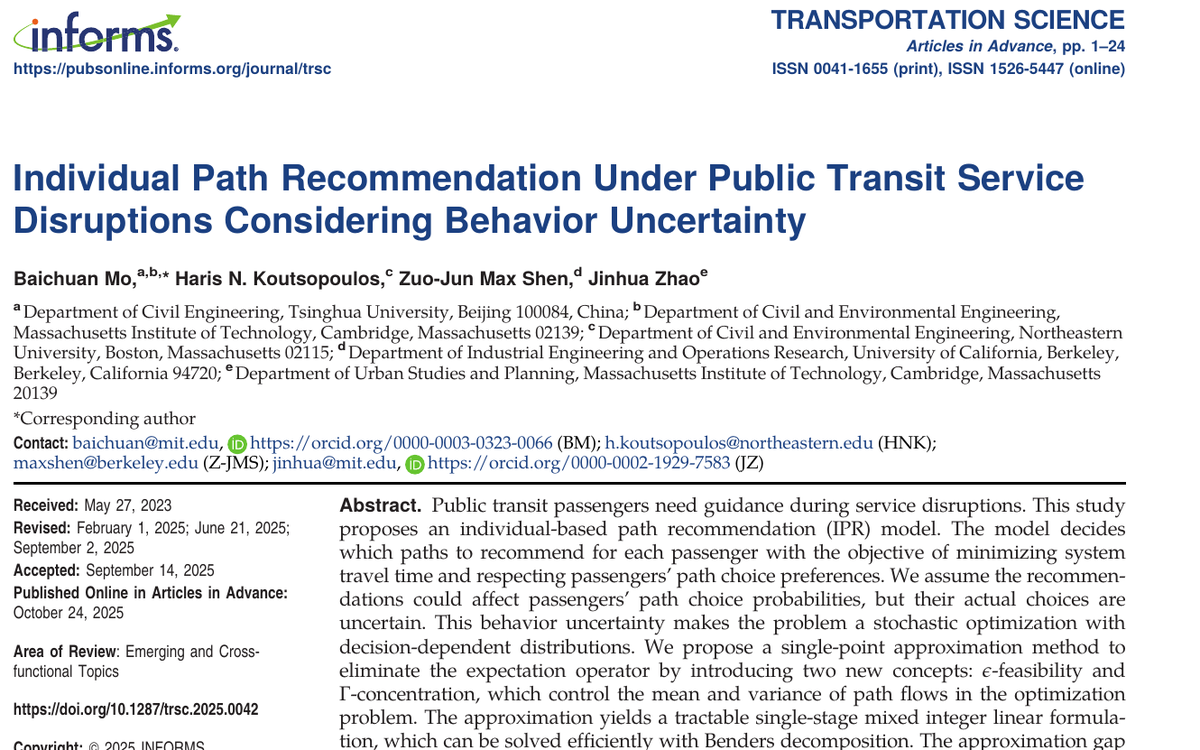
建模乘客行为的不确定性,在服务中断时为乘客推荐更具韧性的出行路径。
Transportation Science, 2025, 59 (6), 1235-1258
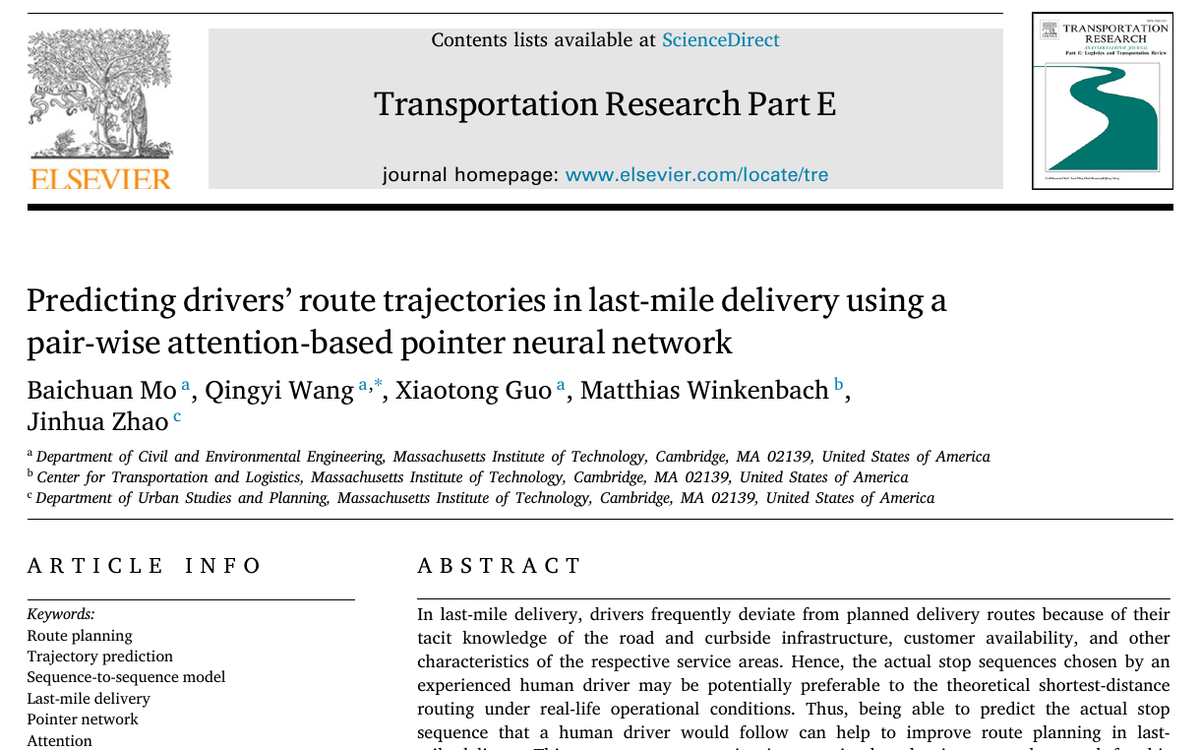
基于成对注意力的指针神经网络,预测司机在末端配送中的行驶轨迹。
Transportation Research Part E: Logistics and Transportation Review, 2023, 175, 103168
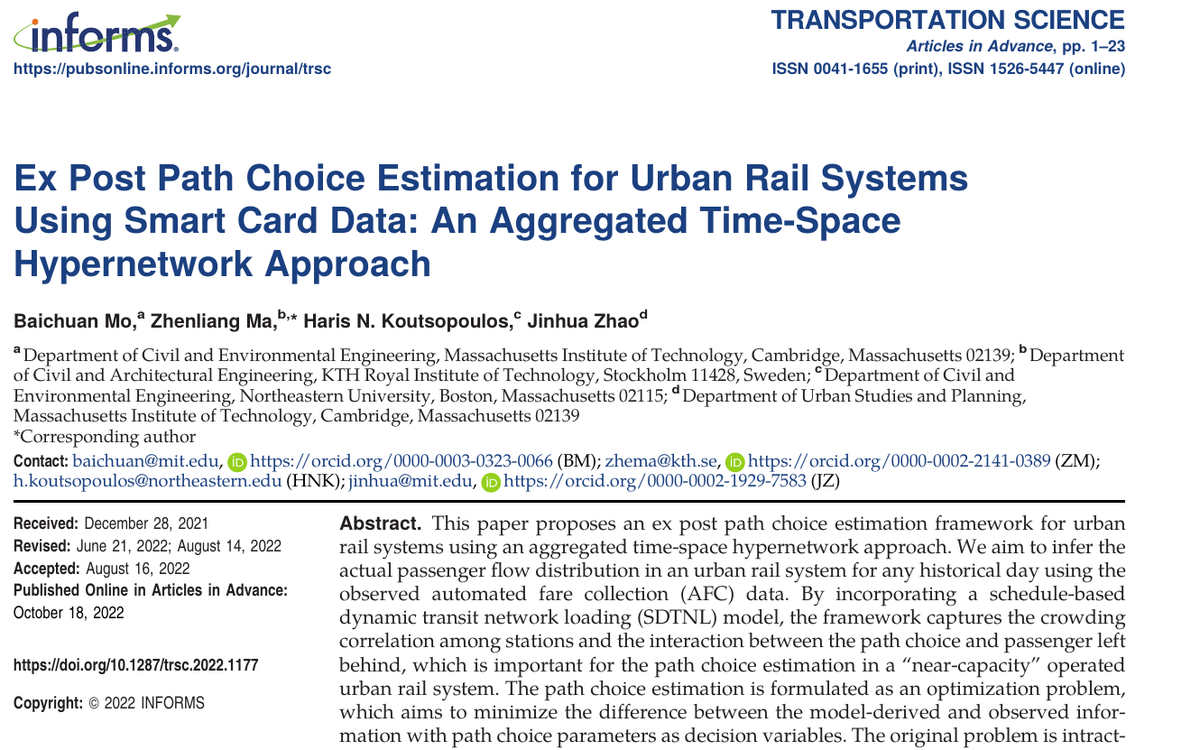
基于刷卡数据与聚合时空超网络,估计城市轨道乘客的路径选择。
Transportation Science, 2023, 57 (2), 313-335
在交通系统发生事故时,研究如何通过高效的优化与机器学习算法,调整运营、指导乘客,让系统快速恢复。具体包括事故感知的乘客行为推断、鲁棒路径推荐、网络性能建模与韧性运营控制。
将人工智能应用于公共交通、共享出行、供应链物流等多个场景,包括基于强化学习的实时决策、时序预测大模型、交通管理 Agent、ETA 预测与末端配送路径预测等。
围绕政策分析与问卷调研、计量经济学模型应用、刷卡与车牌识别等多源数据分析,研究如何用现代机器学习与优化理论改良传统计量经济学模型。
研究通勤碳排放、公共健康风险、住房流动性与城市信息物理社会系统韧性,并将交通系统放在更广义的城市可持续发展和跨学科政策评估框架中理解。